
Guides
Mockup Maker Guide: Create E-Commerce Visuals Fast
Use a reliable mockup maker to generate photorealistic product visuals for print-on-demand and e-commerce workflows.
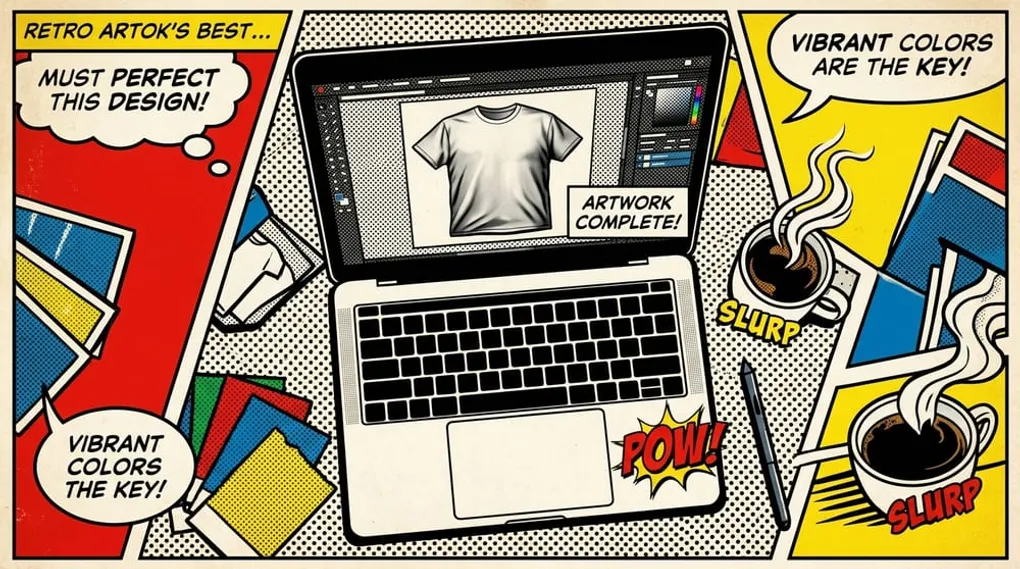
Mockup Maker Guide: Create E-Commerce Visuals Fast
A high-quality mockup maker is the engine behind every successful Print-on-Demand storefront. It allows you to transform your digital designs into photorealistic product images, helping your customers visualize your products as finished goods without the need for an expensive studio photoshoot.
Key takeaways
- A mockup maker replaces expensive photoshoots with fast, scalable, photorealistic imagery.
- Use a unified mockup editor to manage files, lighting, and placement in one centralized dashboard.
- Always match your mockup style to your target buyer’s aesthetic for better brand consistency.
- Batch generation tools save hours of manual effort when launching full product collections.
- Avoid stretched designs, low-resolution uploads, and mismatched background lighting.
Why a mockup maker is your best friend
Shoppers don’t buy designs—they buy products. If you sell a t-shirt, the customer needs to see what that shirt looks like on a human being, or at least a realistic flat lay.
Trying to do this manually in Photoshop takes hours. You have to hunt down PSD files, adjust smart objects, tweak the displacement maps, and hope the lighting looks right. Hiring a photographer for every new design drop is a fast way to burn through your startup cash.
A mockup maker fixes this problem. You upload your design, select a product template, and the tool renders a photorealistic image. The fabric wrinkles match the design, and the lighting hits the artwork naturally. It looks real, even though it’s generated.
For Print-on-Demand operators, speed is everything. The faster you move from a generated design to a live Shopify listing, the faster you can test what sells. A dedicated mockup tool removes the friction between having a great idea and actually putting it on the market. If you are struggling with organizing your original designs, check out our Smart Design Manager.
How to choose the right template for your product
Not every mockup fits every brand. If you sell edgy streetwear, you shouldn’t use a mockup of a guy drinking coffee in a brightly lit, cheerful suburban kitchen. You want urban environments, moody lighting, and models that fit the specific vibe of your niche.
Start by looking at your current catalog. Are you selling tech accessories like phone cases or laptop sleeves? Focus on high-detail closeups where the texture is visible. Selling home goods like pillows or canvases? Context is everything. A mug looks better on a messy desk next to a laptop than floating in a pure white void. The environment tells a story.
When you’re browsing your mockup maker’s library, think heavily about consistency. You want your entire store to feel like it belongs to one cohesive brand. Pick 3 to 5 core mockup styles and stick to them. This creates a unified visual language across your Shopify collections.
For more tips on maintaining a strong visual brand, check out the Canva Design School. It is an excellent resource for learning how visual consistency impacts buyer trust.
The step-by-step mockup workflow
Building product visuals shouldn’t be a messy, disorganized process. A structured workflow keeps you from hunting for files or re-doing work.
From design export to the unified editor
First, get your artwork right. Use our AI design generator to explore concepts, or simply upload your own files into the Smart Design Manager. Make sure your resolution is high enough. Nobody likes a blurry print, and a low-res file will look terrible no matter how good the mockup template is.
Once your design is prepped, move into the mockup phase. We use a unified mockup editor (currently available for users with the feature enabled) that brings everything into one full-screen workspace. You don’t have to bounce between five different browser tabs. You load your composition, adjust the placement, and check the scale right there.
Make sure the artwork actually fits the print area. If it wraps around the side of a mug, check the edges carefully. If it’s a front-print hoodie, ensure the design sits at the correct chest height. Small details make a huge difference in realism.
Batch mockup generation for scale
Uploading designs one by one is fine when you’re just starting out, but what happens when you need to drop 20 new designs for a seasonal launch? You hit a massive operational bottleneck.
If you have batch mockup generation enabled in your account, use it. You can select multiple products—up to 20 selected items at once—and submit the job in a single click. The system queues the work, processes it in the background, and spits out files ready for your store.
It turns a three-hour manual chore into a five-minute task. You can track the progress right in the upload manager dashboard, so you never have to guess if a file failed or if the job is still running.
Understanding resolution tiers and costs
When you generate these visuals, you need to understand the relationship between file resolution and rendering costs.
If you are using resolution-based credit costs, remember that higher quality requires more processing power. For example, a 1K render might cost 15 credits, a 2K render might cost 25 credits, and a 4K render jumps to 50 credits.
For a standard Shopify product gallery, 2K is usually the sweet spot. It provides enough detail for the zoom feature to work well without slowing down your page load times. Save the 4K renders for hero banners on your homepage.
Getting lighting, angles, and context right
A mockup is only as good as its lighting integration. The biggest giveaway of an amateur mockup is when the design looks like a bright, flat sticker slapped onto a dark shirt. The shadows don’t match, and the highlights are wrong.
When you configure your product, pay close attention to the base color of the item and the brightness of your design. A sophisticated mockup maker handles the blending automatically, ensuring the texture of the fabric or material shows through the ink.
Angles matter too. A straight-on flat lay is great for the primary product image. But for your secondary gallery images, use lifestyle angles. Show the product being worn or used in a real environment. For a broader store workflow, read how to automate Printify.
Using mockups for social media marketing
Your website isn’t the only place these images live. Mockups are the fuel for your TikTok, Instagram, and Facebook ads. But social media requires a totally different approach than a standard e-commerce product page.
On your store, clean and simple works best because the goal is clarity. On social media, you need stopping power. Use lifestyle mockups that feature interesting backgrounds, dynamic models, or bold color contrasts. Crop the images tight to show off the artwork. Show close-up details of the design texture.
And remember to export your files in the right aspect ratio. A square 1K image might work perfectly for an Instagram carousel post, but you will definitely want vertical 9:16 formats for stories and reels.
Static vs. video mockups
Right now, static photorealistic images are the bread and butter of the Print-on-Demand e-commerce world. They load fast, they clearly show the product from multiple angles, and they’re relatively cheap to produce at scale.
But video mockups are becoming a bigger part of the ecosystem. A video showing a model moving in your t-shirt builds significantly more trust than a flat, static image. It proves the product has dimension and life. When evaluating tools, keep an eye on video capabilities as they improve.
Common mistakes that hurt conversions
I see new sellers make the same errors all the time. Avoid these pitfalls if you want your store to look legit and convert traffic:
- Ignoring resolution limits. If you stretch a small 500x500 pixel image across a massive blanket template, it will look terrible.
- Overcrowding the design. Just because the print area is huge doesn’t mean you have to fill every single inch of it. Negative space is your friend.
- Mismatched branding. Don’t use a hyper-aggressive grunge mockup template for a cute, pastel, minimalist design.
- Forgetting the mobile view. Most of your buyers are browsing on their phones. If the mockup looks cluttered, it won’t sell.
Ready to upgrade your workflow?
If you’re tired of manual uploads, messy file management, and slow publishing speeds, it’s time to centralize your operations. Moving from an idea to a publish-ready product shouldn’t require jumping between three different apps.
You need a system that handles the heavy lifting for you. A dedicated platform lets you scale your design and product operations with guided steps and confidence.
Check out our pricing to see how you can streamline your entire business. Or explore our mockup catalog to learn more about how our unified mockup tools can keep your creative momentum high.
Frequently asked questions
Are AI-generated mockups considered real photography?
No. While they are highly photorealistic and designed to look natural on a screen, they are generated visuals. They are not actual photographs of the physical printed item. Always be transparent with your customers.
What file formats do I need for a mockup maker?
Most tools require high-resolution PNG or JPG files for the initial design upload. When exporting your final generated mockup, PNG and WebP are the standard formats you’ll want to use for fast-loading e-commerce stores.
Can I do this directly inside Shopify?
While Shopify hosts your final product images and galleries, you usually need an external mockup maker or an integrated dashboard application to generate the actual product visuals before pushing them into your store’s media library.
What if my mockup generation job fails?
If you’re using a system with proper queue management, like our upload manager, you’ll see a clear status indicator (like failed or error). You can then simply hit retry without having to start the entire configuration process over from scratch.
Ready to Automate Your POD Workflow?
Create your first batch of products with Maestro. Free includes bulk and batch tools for up to 10 products, with a lower AI allowance. Upgrade when you need more capacity.
Next steps
Related workflow pages
Turn this guide into a working production path inside Mockup Maestro.
Bulk mockup generator for Printify
Create consistent lifestyle mockups across large batches without manual downloads.
Custom Printify mockup generator
Build reusable mockup scenes and batch-render branded product visuals.
Mockup catalog
Choose product-specific mockup workflows for apparel, mugs, stickers, and more.
Sync Printify mockups to Shopify
Map the right mockup to each Shopify variant and reduce storefront cleanup.